
Religion
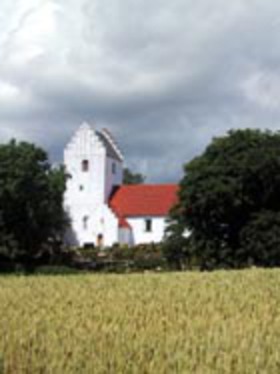
- Church in Denmark (Photo: Lis Lak Risager)
Religion
"Religion and humanist inheritance" is now mentioned in the Preamble to the Lisbon Treaty.
Freedom of religion is safeguarded in Article 6 TEU.
Non-discrimination religion is a horisontal principle in Article 10 TFEU.
To combat discrimination of religion can be dealt with by unanimity in Article 19.1 TFEU.
Incentive measures can be adopted by qualified majority vote according to Article 19.2 TFEU.
Respect for national churches, religious associations or communities is inserted in Article 17.1 TFEU
Philosophical and no confessional organisations must be equally respected in Article 17.2 TFEU.
A new legal base for dialogue with churches and different organisations is inserted in Article 17.3 TFEU.
Religion was one of the Union´s values in the original draft EU Constitution. However, this was refused by the Convention Presidium. The preamble of the revised EU Constitution - the Lisbon Treaty - now states that the Union shall also draw inspiration from ".... the religious inheritance of Europe… ".
The Charter of Fundamental Rights forbid religious discrimination in Article 21 and 22. The Charter is made legally binding by Article 6 TEU.
The exception is a special EU directive that allows discrimination when a church employs a priest (see Directive 2000/L 78/CE from 27 November 2000).
It is a matter for the EU Court in Luxembourg to determine the boundaries of illegal discrimination, and what is justified by religious or theological belief.
This raises such issues as to the right of a religious school to sack a teacher who changes religion.
It also poses questions such as:
- Is the Danish State acting illegally by supporting the Danish State Church and discriminating against other churches?
- May abortion be forbidden on religious grounds, and the EU legal right of freedom to supply abortion services be restricted, even though a country has no special treaty protocol like those negotiated by Ireland and Malta?
Links
See also Discrimination and Churches
