
Investiture

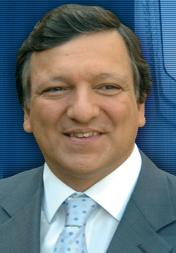
- José Manuel Barroso (Photo: European Commission)
The European Parliament process of approving the EU Commission President and the College of Commissioners:
- European Parliament hearings of the ten new commissioners was held in April 2004.
- This allowed for the formal vote on the enlarged EU Commission shortly after the solemn session at the beginning of May 2004. The solemn session before the EU elections marked the enlargement of the EU from 15 to 25 members. (now 27)
- After the elections to the EU Parliament in June 2004, the European Council nominated its candidate for President of the EU Commission. The outgoing Portuguese Prime Minister, Jose Manuel Barroso, was voted upon in the EU Parliament in late July.
- By the end of August 2004, the names of all candidates for the EU Commission were forwarded to the European Parliament to enable written questioning and oral hearings before the Parliament in September and October of that year.
- The formal vote on the new Commission then took place in the last week of October to allow the new EU Commission to take office on 1 November 2004 - despite the previous Commission's mandate supposedly not ending until 31 December 2004.
- The European Parliament pushed Barroso to make two changes. The Italian Commissioner candidate Buttiglione was rejected because he had made unacceptable remarks about homosexuals. The Latvian candidate was rejected because she had been sceptical regarding the EU.
Future
The Lisbon Treaty states that the European Parliament 'elects' the Commission President and then the entire Commission. However, the European Council only gives the Parliament one presidential candidate to chose. If the Parliament refuses to approve the candidate presented by the heads of state and government in the European Council, the European Council may nominate a new candidate. The Parliament cannot force through the parliamentary principle and insist on its own candidate but only create a crisis in the European cooperation to which the Lisbon Treaty proposes no solution.
At an EU Summit, an alliance of 20 out of 27 member states must be behind the nomination for Commission President and the team of commissioners.
The question of the appointment is settled by an extended qualified majority voting where the qualified majority represents 72 % of the Member States and 65% of the citizens of the EU.
The Lisbon Treaty also proposes a rotation arrangement where the Member States only will be represented on the Commission for two our of every three periods, that is, for 10 years out of 15.
Today the Member States "propose" their national candidate for the Commission. The Lisbon Treaty change the word "proposals" into "suggestions" which means that the appointed Commission President may chose a candidate of his own choice.

