
National parliaments
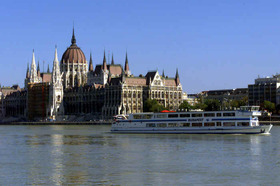
- The Hungarian Parliament (Photo: European Commission)
The national parliaments of all of the EU Member States have special committees on European Affairs. They have established special co-operation over European affairs through COSAC.
25 national parliaments have their own representatives in Brussels to operate as an early warning system for the national parliaments.
Until now, except in a few countries, the national parliaments have not played a significant role in the process of European integration.
Recently, a common secretariat for the national parliaments was established in Brussels.
30 June 2009 the German Constitutional Court in Karlsruhe insisted on a new law for parliamentary influence on EU affairs before it would allow the ratification of the Lisbon Treaty. See German Constitutional Court case.
The Lisbon Treaty has inroduced an "alarm bell" system or so-called "yellow card". This system allows national Parliaments to object to a Commission proposal within eight weeks of its publication on grounds of breaching the principle of subsidiarity and the principle of proportionality.
That is to say, breaching the principle that if something may be achieved better at a local level then the EU should not interfere.
Only if 1/3 of the national parliaments objects, is the Commission required to review the proposal.
For reasons of infringement of the subsidiarity principle, the member states´governments can take a case to the EU Court on behalf of their national parliaments. This means that national parliaments cannot do so on their own.
In 2006 the Commission and the Council decided to send all future proposals to the national parliaments, along with sending them to the European Parliament. President of the Commission, Barosso, promised informally to decide according to the national parliaments statements on decisions following the principles on subsidarity and proportionality.
This practise started in September 2006. Until 2009 there have been 368 reactions. Now there are more than 500 per year. The Commission did not change any proposals after reactions from the national parliaments.
The Lisbon Treaty also introduce an "orange card" where the Commission is obliged to alter or cancel its proposal. But it require a protest from 55 % of the governments. A new law can anyway be blocked by 45 % of the governments.
Links
The Commission has opened a website for its relations with the national parliaments at:
http://ec.europa.eu/dgs/secret......lations_other/npo/index_en.htm
