
Absolute majority of members in the European Parliament
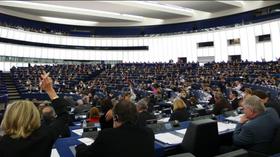
- The European Parliament, Strasbourg, 5 May 2009 (Photo: www.kirkhope.org.uk)
Absolute majority of members in the European Parliament
Usually the European Parliament takes its decisions by a simple majority of those members taking part in a vote. In many cases, for example in the ordinary legislative procedure, budget matters and the so-called "assent procedure," it decides by an absolute majority. This is a majority of all its members, regardless of whether or not all are present.
From July 2014 an absolute majority was 376 of 751 MEPs.
New enlargements may change these figures again. The size of an absolute majority may also change if an MEP place is vacant for some reason.
If MEPs want to censure the Commission, a two-thirds majority of those voting, as well as an absolute majority of the members, is needed.
