Change language
English (EU)
Bulgarian
Catalan
Croatian
Czech
Danish
Dutch
English (UK)
Estonian
Finnish
French
German
Greek
Hungarian
Icelandic
Irish
Italian
Latvian
Lithuanian
Macedonian
Maltese
Norwegian
Polish
Portuguese
Romanian
Slovak
Slovenian
Spanish
Swedish
Turkish
Information pages
Welcome to EUABC
EU Constitution
How to use EUABC
About EUABC
Contact EUABC
Join EUABC team
Translators wanted
Links
Banners
Categories
Agriculture
Budget
Constitution
Consumer Protection
Countries
Court case law
Culture
Decision-making
Democracy and Transparency
Development Policy
Economic and Monetary Affairs
Education
Employment and Social Affairs
Enlargement
Environment
Equality
EU Organisations and Agencies
Fisheries
Foreign and Security Policy
Health and Foods
History and Personalities
Industries
Information Society
Institutions
Internal Market
Justice and Home Affairs
Lobbyists, Social Partners and NGO's
Programmes
Refugees and Immigrants
Regional Affairs
Research and Technology
Trade Policy
Transport
Treaties, Constitutional Affairs and Fundamental Rights
A
B
C
D
E
F
G
H
I
J
K
L
M
N
O
P
Q
R
S
T
U
V
W
X
Y
Z
EU Parliament - See European Parliament
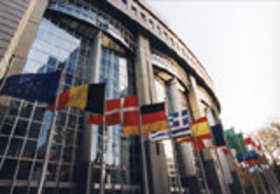
EU Parliament in Brussels (Photo: European Parliament)
Links
European Parliament website
http://www.europarl.europa.eu/
Share
|